河北师范大学与意大利墨西拿音乐学院合作举办音乐表演专业本科教育项目
🌍 外方院校:意大利墨西拿音乐学院

🌍 意大利墨西拿音乐学院
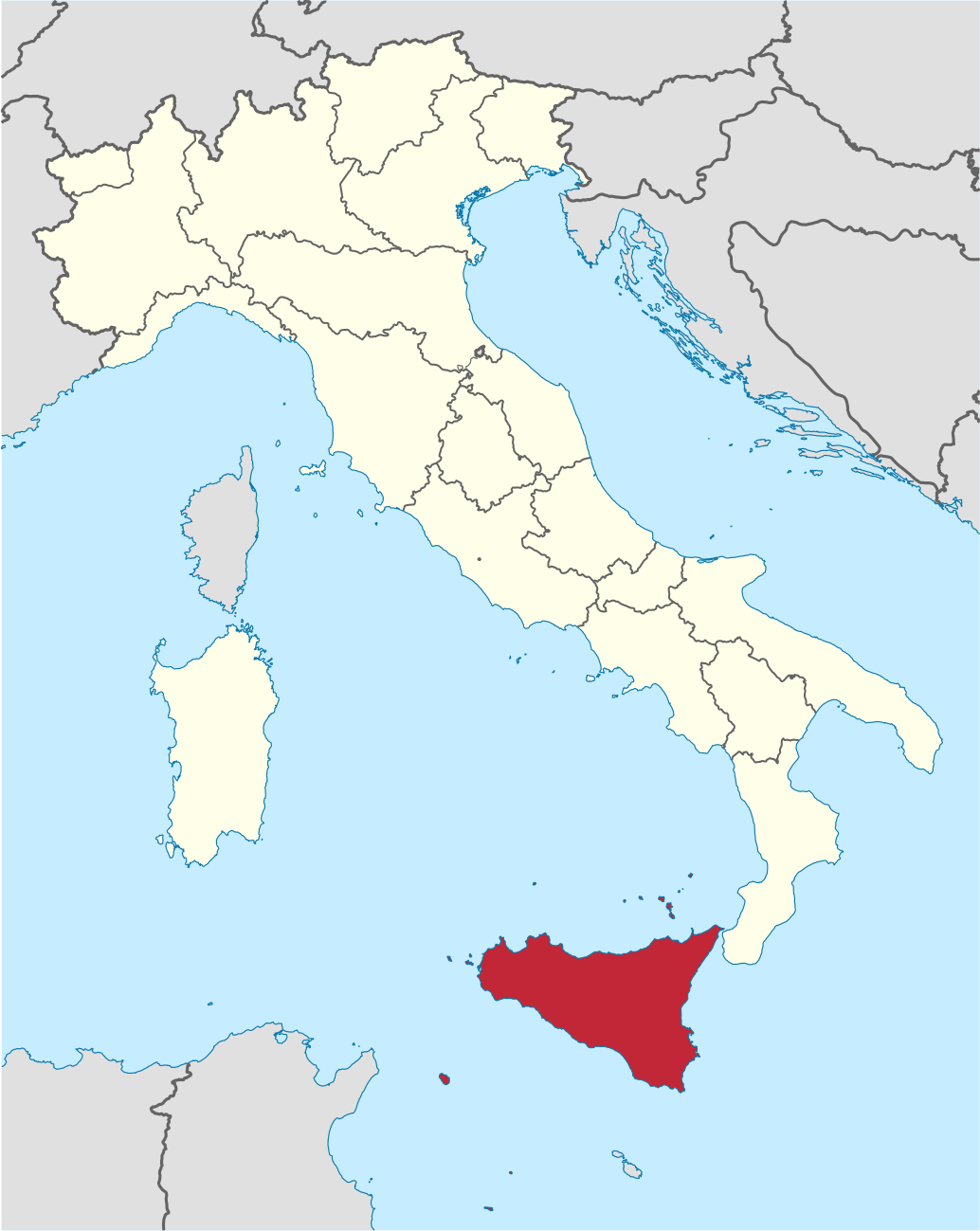
Sicily (Italian and Sicilian: Sicilia), officially the Sicilian Region, is an island in the central Mediterranean Sea and one of the twenty regions of Italy, situated south of the Italian Peninsula in continental Europe. With over 4.7 million inhabitants, including 1.2 million in and around the capital city of Palermo, it is both the largest and most populous island in the Mediterranean Sea. Sicily's namesake is the Sicels, who inhabited the eastern part of the island during the Iron Age. Sicily has a rich and unique culture in arts, music, literature, cuisine, and architecture. Its most prominent landmark is Mount Etna, the tallest active volcano in Europe, and one of the most active in the world, currently 3,403 m (11,165 ft) high. The island has a typical Mediterranean climate. It is separated from Calabria by the Strait of Messina. It is one of the five Italian autonomous regions and is considered part of southern Italy. The earliest archaeological record of human activity on the island dates to around 14,000 BC. By around 750 BC, Sicily had three Phoenician and around twelve Greek colonies along its coasts, becoming one of the centers of Magna Graecia. The Sicilian Wars of 580–265 BC were fought between the Carthaginians and Greeks, and the Punic Wars of 264–146 BC were fought between Rome and Carthage. The Roman province of Sicilia ended with the fall of the Roman Empire in the 5th century AD. Sicily was ruled during the Early Middle Ages by the Vandals, the Ostrogoths,